

- Google AI Releases WAXAL: A Multilingual African Speech Dataset for Training Automatic Speech Recognition and Text-to-Speech Models
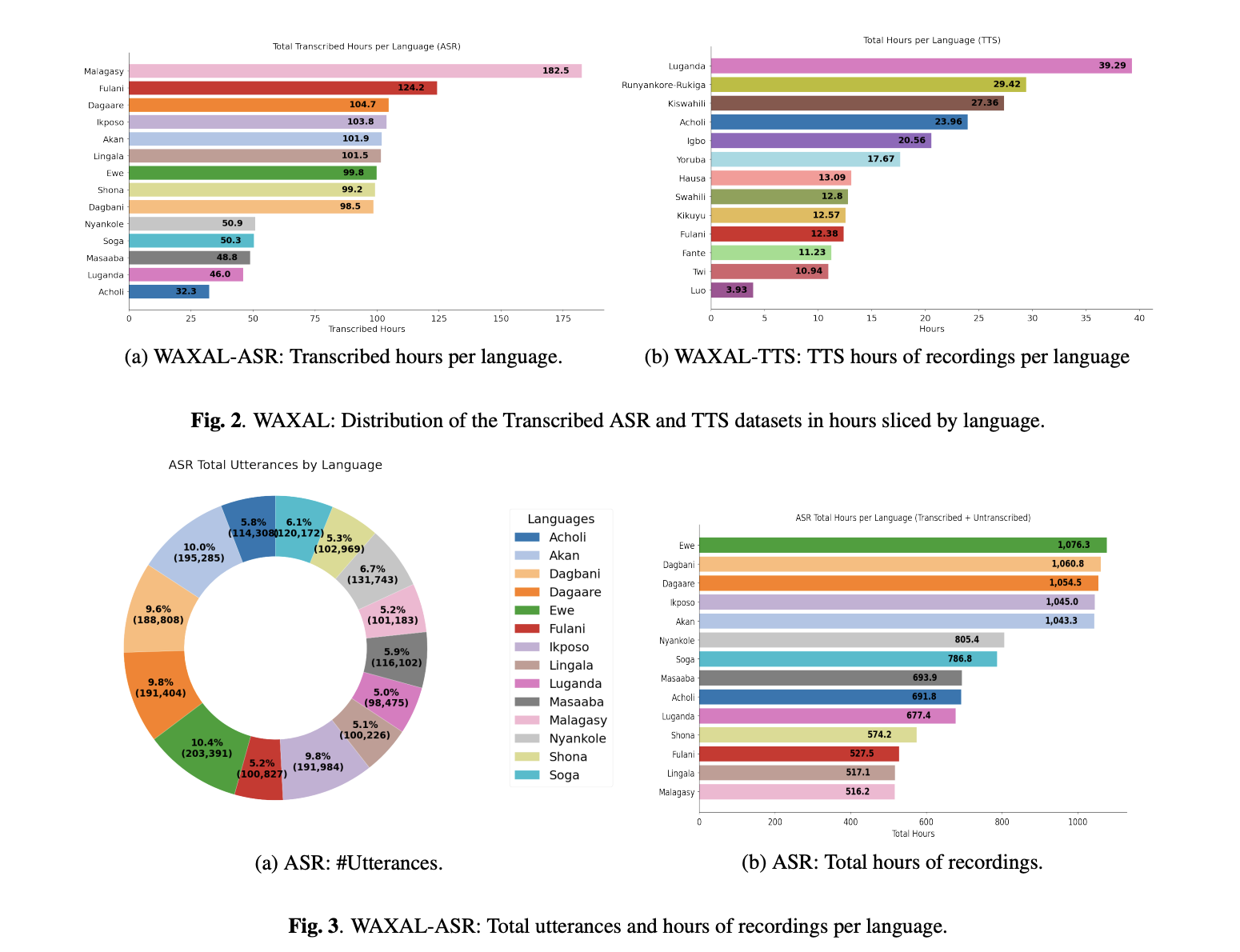
Speech technology still has a data distribution problem. Automatic Speech Recognition (ASR) and Text-to-Speech (TTS) systems have improved rapidly for high-resource languages, but many African languages remain poorly represented in open corpora. A team of researchers from Google and other collaborators introduce WAXAL, an open multilingual speech dataset for African languages covering 24 languages, with The post Google AI Releases WAXAL: A Multilingual African Speech Dataset for Training Automatic Speech Recognition and Text-to-Speech Models appeared first on MarkTechPost.
- How to Build High-Performance GPU-Accelerated Simulations and Differentiable Physics Workflows Using NVIDIA Warp Kernels

In this tutorial, we explore how to use NVIDIA Warp to build high-performance GPU and CPU simulations directly from Python. We begin by setting up a Colab-compatible environment and initializing Warp so that our kernels can run on either CUDA GPUs or CPUs, depending on availability. We then implement several custom Warp kernels that demonstrate The post How to Build High-Performance GPU-Accelerated Simulations and Differentiable Physics Workflows Using NVIDIA Warp Kernels appeared first on MarkTechPost.
- Mistral AI Releases Mistral Small 4: A 119B-Parameter MoE Model that Unifies Instruct, Reasoning, and Multimodal Workloads
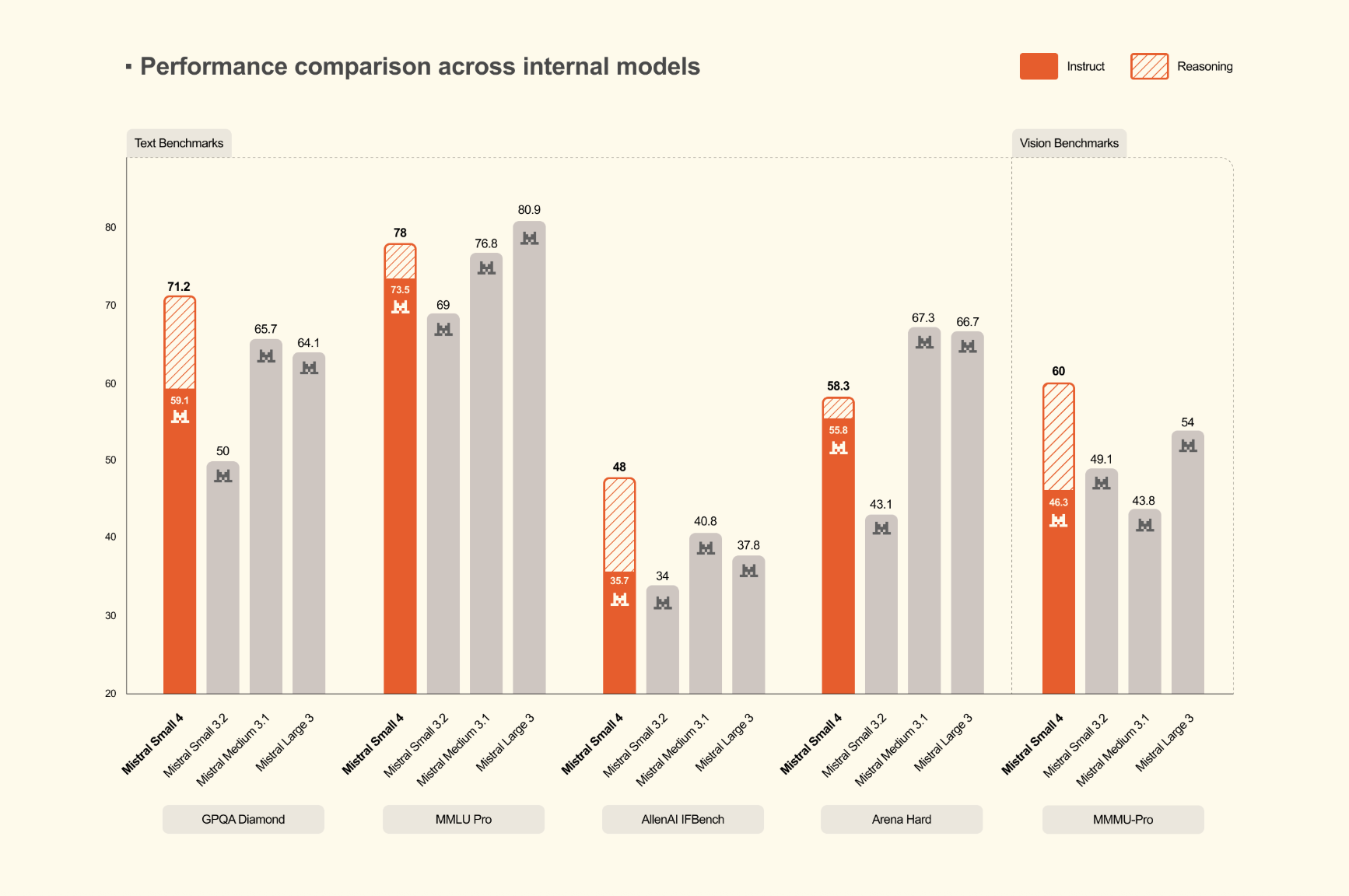
Mistral AI has released Mistral Small 4, a new model in the Mistral Small family designed to consolidate several previously separate capabilities into a single deployment target. Mistral team describes Small 4 as its first model to combine the roles associated with Mistral Small for instruction following, Magistral for reasoning, Pixtral for multimodal understanding, and The post Mistral AI Releases Mistral Small 4: A 119B-Parameter MoE Model that Unifies Instruct, Reasoning, and Multimodal Workloads appeared first on MarkTechPost.
- Moonshot AI Releases 𝑨𝒕𝒕𝒆𝒏𝒕𝒊𝒐𝒏 𝑹𝒆𝒔𝒊𝒅𝒖𝒂𝒍𝒔 to Replace Fixed Residual Mixing with Depth-Wise Attention for Better Scaling in Transformers
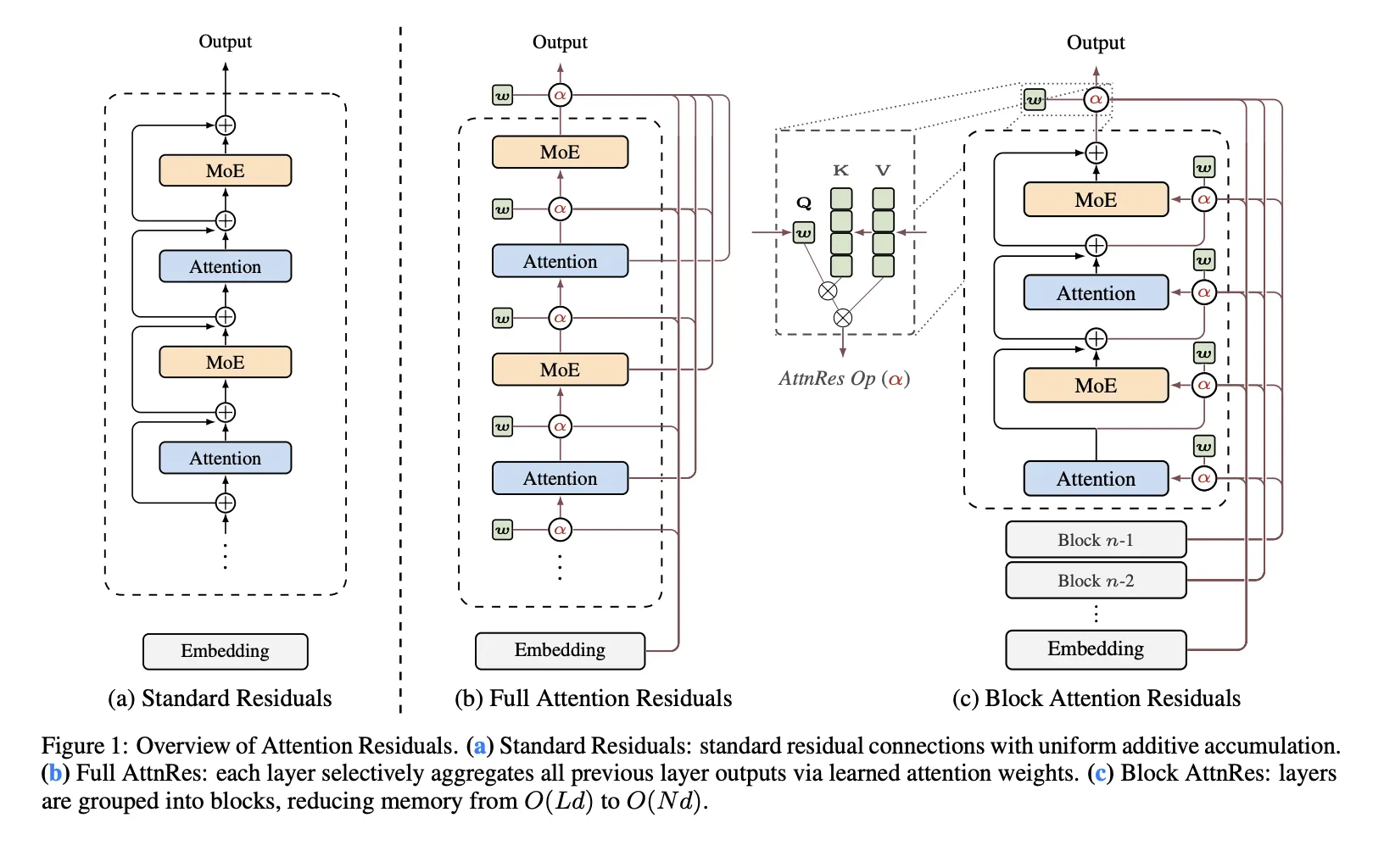
Residual connections are one of the least questioned parts of modern Transformer design. In PreNorm architectures, each layer adds its output back into a running hidden state, which keeps optimization stable and allows deep models to train. Moonshot AI researchers argue that this standard mechanism also introduces a structural problem: all prior layer outputs are The post Moonshot AI Releases 𝑨𝒕𝒕𝒆𝒏𝒕𝒊𝒐𝒏 𝑹𝒆𝒔𝒊𝒅𝒖𝒂𝒍𝒔 to Replace Fixed Residual Mixing with Depth-Wise Attention for Better Scaling in Transformers appeared first on MarkTechPost.
- IBM AI Releases Granite 4.0 1B Speech as a Compact Multilingual Speech Model for Edge AI and Translation Pipelines
IBM has released Granite 4.0 1B Speech, a compact speech-language model designed for multilingual automatic speech recognition (ASR) and bidirectional automatic speech translation (AST). The release targets enterprise and edge-style speech deployments where memory footprint, latency, and compute efficiency matter as much as raw benchmark quality. What Changed in Granite 4.0 1B Speech At the The post IBM AI Releases Granite 4.0 1B Speech as a Compact Multilingual Speech Model for Edge AI and Translation Pipelines appeared first on MarkTechPost.
- A Coding Implementation to Design an Enterprise AI Governance System Using OpenClaw Gateway Policy Engines, Approval Workflows and Auditable Agent Execution
In this tutorial, we build an enterprise-grade AI governance system using OpenClaw and Python. We start by setting up the OpenClaw runtime and launching the OpenClaw Gateway so that our Python environment can interact with a real agent through the OpenClaw API. We then design a governance layer that classifies requests based on risk, enforces The post A Coding Implementation to Design an Enterprise AI Governance System Using OpenClaw Gateway Policy Engines, Approval Workflows and Auditable Agent Execution appeared first on MarkTechPost.
- Meet OpenViking: An Open-Source Context Database that Brings Filesystem-Based Memory and Retrieval to AI Agent Systems like OpenClaw
OpenViking is an open-source Context Database for AI Agents from Volcengine. The project is built around a simple architectural concept: agent systems should not treat context as a flat collection of text chunks. Instead, OpenViking organizes context through a file system paradigm, with the goal of making memory, resources, and skills manageable through a unified The post Meet OpenViking: An Open-Source Context Database that Brings Filesystem-Based Memory and Retrieval to AI Agent Systems like OpenClaw appeared first on MarkTechPost.
- LangChain Releases Deep Agents: A Structured Runtime for Planning, Memory, and Context Isolation in Multi-Step AI Agents
Most LLM agents work well for short tool-calling loops but start to break down when the task becomes multi-step, stateful, and artifact-heavy. LangChain’s Deep Agents is designed for that gap. The project is described by LangChain as an ‘agent harness‘: a standalone library built on top of LangChain’s agent building blocks and powered by the The post LangChain Releases Deep Agents: A Structured Runtime for Planning, Memory, and Context Isolation in Multi-Step AI Agents appeared first on MarkTechPost.
- Zhipu AI Introduces GLM-OCR: A 0.9B Multimodal OCR Model for Document Parsing and Key Information Extraction (KIE)
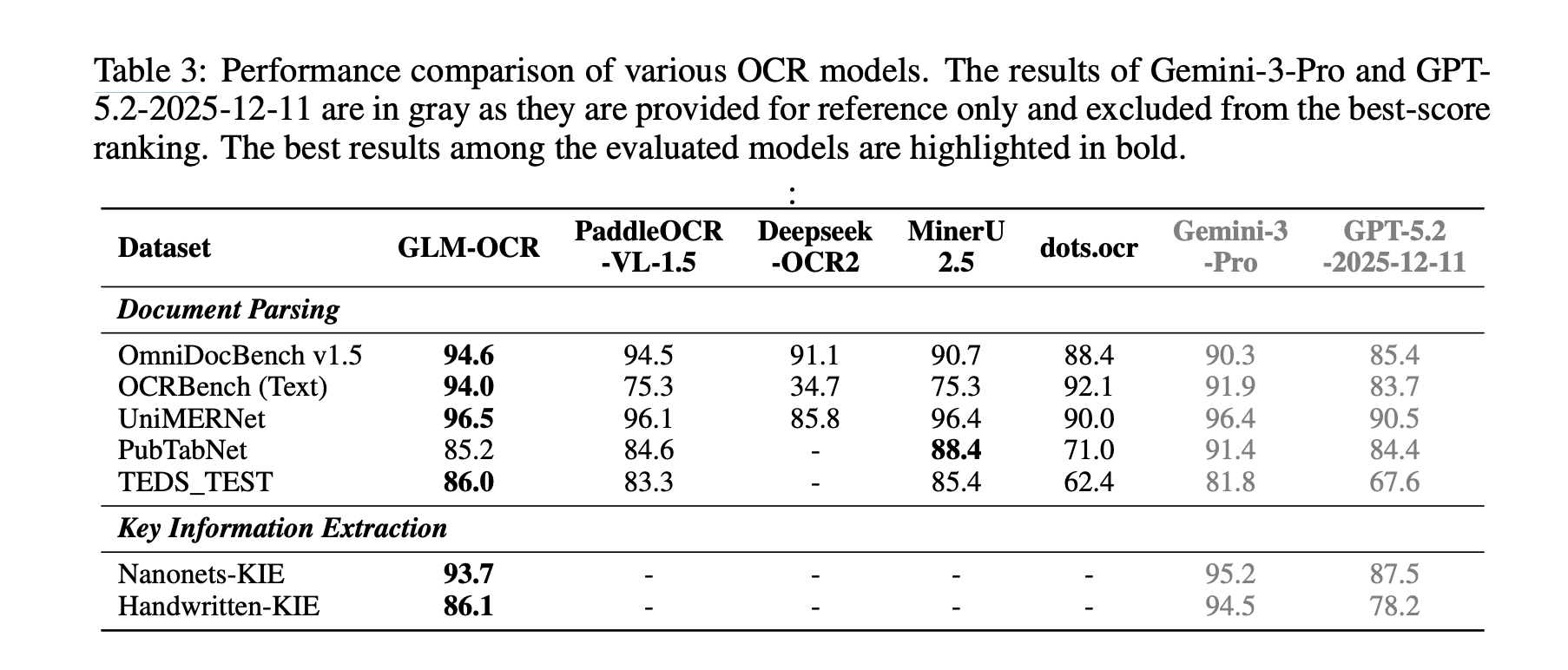
Why Document OCR Still Remains a Hard Engineering Problem? What does it take to make OCR useful for real documents instead of clean demo images? And can a compact multimodal model handle parsing, tables, formulas, and structured extraction without turning inference into a resource bonfire? That is the problem targeted by GLM-OCR, introduced by researchers The post Zhipu AI Introduces GLM-OCR: A 0.9B Multimodal OCR Model for Document Parsing and Key Information Extraction (KIE) appeared first on MarkTechPost.
- How to Build Type-Safe, Schema-Constrained, and Function-Driven LLM Pipelines Using Outlines and Pydantic
In this tutorial, we build a workflow using Outlines to generate structured and type-safe outputs from language models. We work with typed constraints like Literal, int, and bool, and design prompt templates using outlines.Template, and enforce strict schema validation with Pydantic models. We also implement robust JSON recovery and a function-calling style that generates validated The post How to Build Type-Safe, Schema-Constrained, and Function-Driven LLM Pipelines Using Outlines and Pydantic appeared first on MarkTechPost.